

Your kitchen cabinets set the tone for the whole room, so when they start to look dated or worn, it is natural to wonder whether you should refinish them or tear them out and start fresh. Both paths can give you a kitchen you love, but they come with very different price tags, timelines, and levels of disruption.
At George's Painting, a family-owned company serving Worcester and the surrounding MetroWest and Worcester County MA area, we walk homeowners through this decision every week. This guide breaks down what each option really involves, what it tends to cost, and how to tell which one fits your kitchen, your budget, and your plans for the home.
What cabinet refinishing actually involves
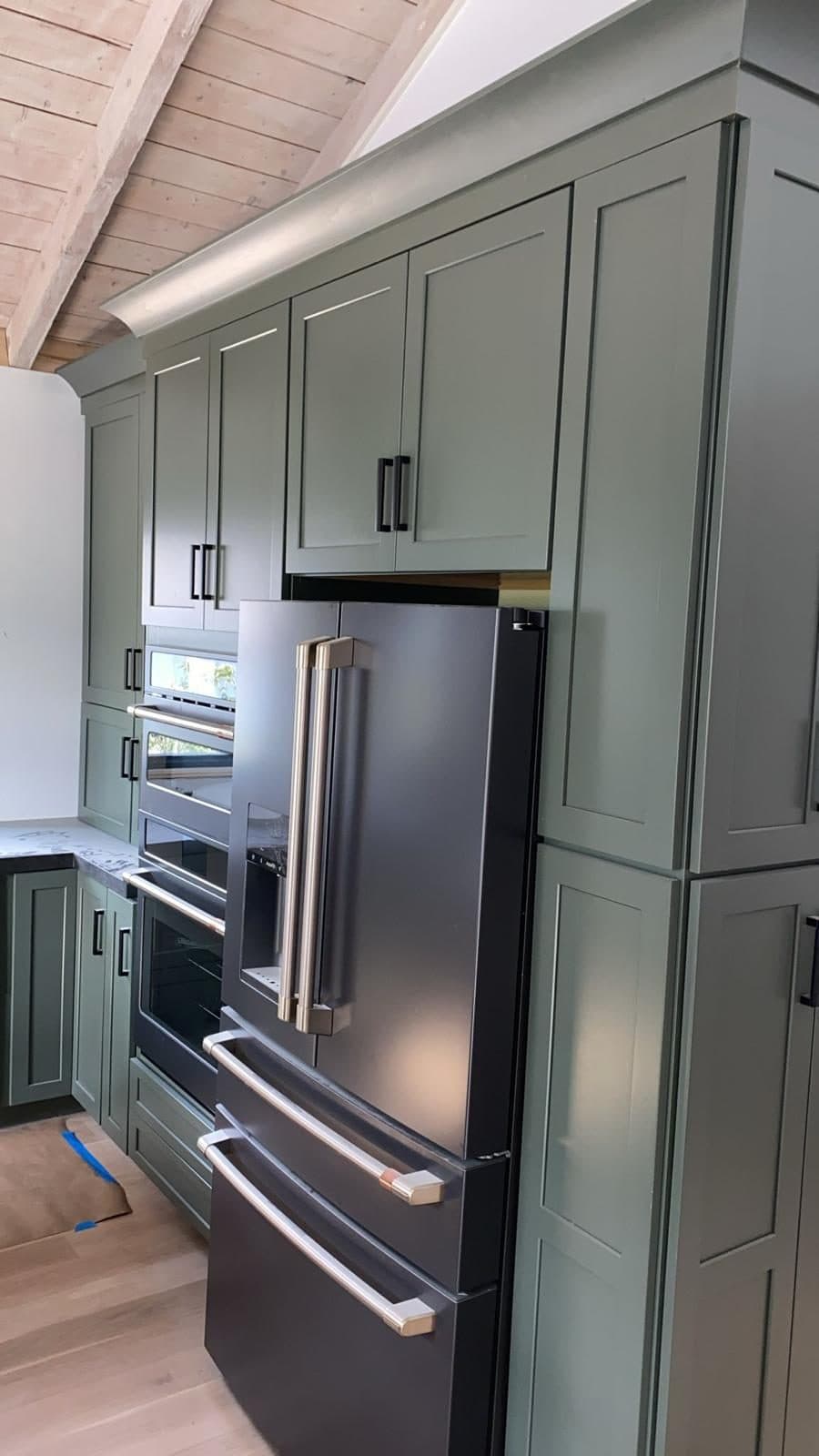
Cabinet refinishing (sometimes called cabinet painting or resurfacing) keeps your existing cabinet boxes, doors, and drawer fronts in place and gives them a brand new finish. The doors and drawers come off, everything gets cleaned and degreased, surfaces are sanded and prepped, gaps and dings are filled, and then a durable primer and topcoat go on.
A proper refinish is not a quick roller job. The prep is most of the work, because paint only lasts on cabinets if the surface underneath is clean, deglossed, and smooth. We use Benjamin Moore products chosen for cabinetry so the finish holds up to daily wear, moisture, and cleaning. The result is a factory-smooth look in the color and sheen you choose, on the cabinets you already own.
Refinishing works on wood, MDF, and many laminate or thermofoil doors, and it can pair beautifully with new hardware and a fresh coat on the walls to make the whole kitchen feel renovated.
What full cabinet replacement involves
Replacement means removing your current cabinets entirely and installing brand new ones. That opens the door to changing the layout, adding or moving cabinets, swapping in new boxes, doors, drawer glides, and interior storage, and often redoing countertops, backsplash, and sometimes plumbing or electrical along the way.
Because you are starting from scratch, replacement gives you the most freedom to fix things that refinishing cannot touch, like a cramped layout, too few cabinets, or boxes that are falling apart. It is also the bigger project by far, involving demolition, delivery lead times on new cabinetry, and coordination with other trades.
If you are already gutting the kitchen and moving walls, appliances, or the sink, replacement usually makes sense as part of that larger remodel. If the bones of your kitchen are fine and you mostly dislike the color or finish, replacement can be a lot of money spent to solve a problem refinishing handles for much less.
Cost comparison: what to expect
The single biggest difference between these two options is cost. As a general rule, refinishing your existing cabinets tends to run a fraction of what full replacement costs, often somewhere in the range of a quarter to a third of the price of new cabinetry for a similar kitchen. Every kitchen is different, so treat these as ballpark ranges, not quotes.
Refinishing is more affordable because you are paying for prep, materials, and skilled labor, not for new boxes, demolition, disposal, and installation of an entirely new kitchen. New cabinets carry the cost of the cabinetry itself plus tear-out, and they often trigger new countertops and backsplash because the old ones rarely fit the new footprint.
The honest answer on price is that it depends on the size of your kitchen, the number of doors and drawers, the condition of what you have, and the finish you want. The best way to compare real numbers for your home is a free estimate, where we can look at your actual cabinets and give you a clear figure for refinishing so you can weigh it against replacement quotes.
When refinishing is the right call
Refinishing is usually the smart move when your cabinet boxes are solid and well built, your layout already works for how you cook and live, and your main complaint is the color, the dated finish, or general wear and tear. If you open a cabinet and the structure feels sturdy, the doors hang straight, and you are mostly tired of looking at honey oak or worn white, you are an excellent candidate for refinishing.
It is also the right call when you want a big visual change on a modest budget, or when you like your kitchen and just want it to feel current. Many homeowners in Shrewsbury and Westborough come to us wanting a lighter, cleaner look without the cost and chaos of a full remodel, and refinishing delivers exactly that.
Refinishing shines when the goal is transformation without demolition: same great layout, brand new look, far less money and mess.
When replacement makes more sense
Replacement is the better path when the cabinets themselves are damaged, water swollen, or falling apart, when the layout genuinely does not work for your family, or when you are changing the footprint of the kitchen by moving the sink, adding an island, or knocking down a wall.
If your boxes are particleboard that has crumbled, if doors will not stay on their hinges, or if you simply do not have enough storage no matter how you arrange things, a fresh finish will not fix the underlying problem. In those cases, spending on refinishing can feel like putting nice paint on a structure that needs to go.
Replacement also makes sense when you are already investing in a full gut renovation and new cabinets are a natural part of that scope. The key question is whether the bones are worth keeping. If they are, refinishing wins on value. If they are not, replacement is money well spent.
Durability, finish quality, timeline, and resale
A common worry is that painted or refinished cabinets will not hold up. Done correctly, with thorough prep and quality Benjamin Moore products rated for cabinetry, a refinished surface is tough, washable, and built to handle years of daily kitchen use. Cutting corners on prep is what leads to peeling, so the craftsmanship matters more than the option you choose.
On timeline and disruption, refinishing is the clear winner. A typical cabinet refinishing project wraps up in a matter of days, and your kitchen stays largely intact and usable throughout. Full replacement can stretch on for weeks once you factor in demolition, cabinet lead times, installation, and the countertop and backsplash work that usually follows, often leaving you without a functional kitchen for a good stretch.
For resale, both fresh cabinetry and a clean, professional refinish read as an updated kitchen to buyers across Worcester County. Refinishing tends to deliver strong return because it dramatically improves the look for a small share of the cost, which is a big reason we recommend it so often to homeowners preparing to sell or simply wanting more enjoyment from the kitchen they have.