
Ask any painter in New England when to schedule an exterior job and you will hear the same thing: timing is everything. The paint itself is only part of the story. What really decides whether that fresh coat lasts a decade or starts peeling in two years is the weather on the days it goes on, and how it cures in the weeks after.
At George's Painting, we work across MetroWest and Worcester County, from Worcester and Shrewsbury out to Westborough and Hopkinton. Our seasons swing hard here, hot and sticky in July, crisp and unpredictable by October, so knowing the ideal window protects your investment. Here is how we think about timing, temperature, and moisture, and why the calendar matters more than most homeowners expect.
Temperature and Humidity: What Exterior Paint Actually Needs
Modern exterior paints are formulated to go on within a specific temperature range. As a general guide, most latex and acrylic products want air and surface temperatures between roughly 50 and 85 degrees Fahrenheit while they are applied and curing. Below about 50 degrees, the paint can struggle to form a proper film, which shows up later as cracking, poor adhesion, or a chalky finish.
Humidity matters just as much as heat. When the air is heavy with moisture, paint dries slowly and unevenly, and trapped water can leave a cloudy or blotchy surface. A relative humidity in the 40 to 70 percent range is comfortable for most exterior coatings. New England summers can push well past that, which is one reason we watch the forecast closely rather than the date on the calendar.
We use Benjamin Moore paints, and like any quality product they perform best when they are applied under the conditions they were engineered for. Rushing a coat onto a cold or damp surface is the fastest way to waste good paint and good money.
Why Late Spring Through Early Fall Is the Prime Window
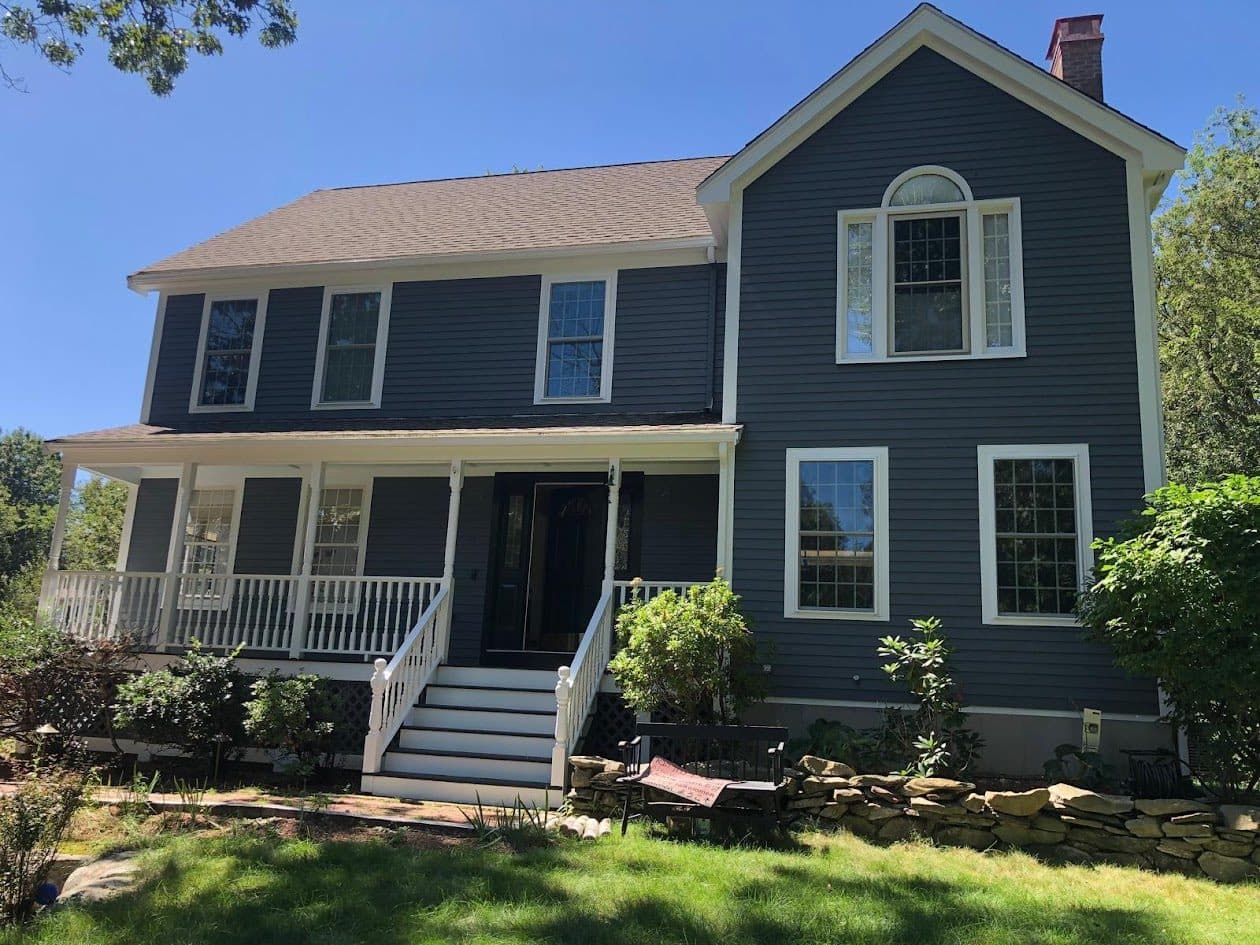
In Massachusetts, the sweet spot for exterior painting runs roughly from May through October. By late spring the deep cold has broken, surfaces have had time to dry out from winter, and daytime temperatures settle into that friendly 50 to 85 degree band more often than not. That stretch through early fall is when we book the bulk of our exterior work in Worcester, Northborough, and the surrounding towns.
Late spring is popular for good reason. The pollen settles, the days get longer, and homeowners want the job done before summer entertaining season. Early fall, from September into mid October, is arguably the finest painting weather all year in New England: warm afternoons, low humidity, and cool nights that are not yet cold enough to cause trouble.
The edges of this window are where judgment comes in. April can tease you with a warm week and then drop back below freezing at night. Late October can hand you a perfect afternoon that turns raw and damp by evening. A good crew reads those swings and plans around them rather than forcing a job into a bad stretch.
Dew Point and Overnight Temperatures: The Hidden Factors
Homeowners tend to focus on the daytime high, but the overnight numbers often decide whether a coat cures cleanly. Paint keeps curing long after the sun goes down, and if the surface temperature drops near the dew point, moisture condenses right onto the fresh finish. That surface moisture can cause streaking, blushing, or reduced adhesion, even when the afternoon looked perfect.
This is exactly why the shoulder seasons demand caution. A 70 degree day in early October is lovely, but if the overnight low dips into the low 40s and the air is damp, the surface can sweat before the paint has fully set. We aim to finish applying well before evening so each coat has warm, dry daylight hours to set up.
The practical takeaway: it is not enough for the day to be warm. The whole 24 hour cycle needs to cooperate. Reading the dew point and the overnight forecast is part of what separates a coating that lasts from one that fails early.
Summer Heat Versus Fall Comfort
Summer looks like the obvious choice, and plenty of exterior work does get done in June, July, and August across Framingham, Marlborough, and Natick. But raw heat brings its own problems. When the sun bakes a wall and the surface climbs well above the air temperature, paint can dry too fast, leaving lap marks, brush drag, and poor leveling before it has a chance to flow out properly.
The fix in high summer is to chase the shade. A good crew paints the east side in the morning, moves to the north and shaded faces through midday, and saves the west side for late afternoon as the sun swings around. Working with the sun rather than against it keeps the surface temperature in a workable range even on hot days.
Fall, by contrast, is often more forgiving. The lower sun angle is gentler, humidity typically drops, and the air sits in that ideal band for longer stretches. Many painters, ourselves included, consider a clear September or early October week to be close to perfect exterior weather in this part of the state.
Why You Should Book Early
Here is the part homeowners underestimate: everyone in New England wants the same good weather, and the calendar of workable days is shorter than it looks. Between rain days, damp mornings, and the hard bookends of the season, the truly reliable exterior window is only a handful of months wide. Reputable crews fill those months well in advance.
If you wait until a stretch of perfect June weather to start calling around, you may find the best painters already booked into August or beyond. We recommend homeowners in Shrewsbury, Grafton, Holden, and the wider MetroWest area reach out early in the year to lock in a spot while the schedule is open. Planning ahead also gives time for proper prep, which is where lasting paint jobs are truly made.
Booking early does not mean the work has to happen the moment you call. It means you get your pick of the good weather rather than settling for whatever gap is left when the season is nearly gone.
How Off-Season Interior Work Fits the Calendar
When the cold sets in and exterior painting shuts down for the year, the work does not have to stop. The colder months are the ideal time for interior projects, and pairing the two seasons is how many homeowners keep their whole house looking sharp without cramming everything into one short summer.
From late fall through early spring, we focus on interior painting, cabinet refinishing, trim and molding, light carpentry, and wallpaper installation. These jobs are unaffected by frost or rain, and with heat and controlled conditions indoors, the results are consistent all winter long. A power washing appointment can also be scheduled for the first mild, dry stretch of spring to prep siding for the coming exterior season.
Thinking about the year as a whole, exterior in the warm months, interior in the cold ones, lets you spread projects out and keep every part of your home on a steady maintenance rhythm rather than a frantic dash for the sunny weeks.